Decoding Water Heater Energy Efficiency Ratings for Ontario Homes
When the sun is shining bright over Hamilton, Ancaster, and Dundas, and summer activities call, the last thing you want to worry about is an inefficient water heater silently draining your wallet. While we might not think about our hot water system as much in the warmer months, it’s actually one of the biggest energy consumers in your Ontario home year-round. Understanding its energy efficiency rating is crucial for managing your utility bills and ensuring a reliable supply of hot water.
At Water Heaters R Us, we believe in empowering our neighbours across Stoney Creek, Burlington, and beyond with knowledge. Let's demystify water heater energy efficiency ratings, explain what they mean for your home, and offer practical advice to help you save energy and money.
Why Water Heater Energy Efficiency Matters to You
Imagine enjoying a refreshing shower after a long day at Burlington Beach or tackling a load of laundry without a second thought about the cost of heating that water. The energy efficiency of your water heater directly impacts your comfort and your budget. An efficient unit uses less energy to heat the same amount of water, translating into:
- Lower Utility Bills: This is the most direct and noticeable benefit. Less energy consumption means more money in your pocket.
- Reduced Environmental Impact: Using less energy means a smaller carbon footprint, contributing to a greener Ontario.
- Consistent Hot Water Supply: Efficient units are often newer and perform better, providing hot water more reliably.
- Increased Home Value: Energy-efficient appliances are a selling point for many prospective homebuyers.
Key Water Heater Energy Efficiency Ratings Explained
Navigating the various labels and numbers on water heaters can be confusing. Here are the primary ratings you'll encounter:
Uniform Energy Factor (UEF)
The Uniform Energy Factor (UEF) is the current standard for measuring a water heater's overall energy efficiency. It replaced the older Energy Factor (EF) rating in 2017 to provide a more consistent and accurate comparison across different types of water heaters (tank-style, tankless, heat pump, etc.).
- What it means: The UEF represents the ratio of usable hot water produced to the total energy consumed by the water heater. A higher UEF rating indicates greater efficiency. For example, a UEF of 0.80 means 80% of the energy consumed is converted into usable hot water, while 20% is lost.
- Why it matters: UEF accounts for various factors like standby heat loss, recovery efficiency, and how the unit performs under different usage conditions, giving you a more realistic picture of its real-world efficiency.
Energy Star Certification
You’ve likely seen the blue ENERGY STAR® label on many appliances, and water heaters are no exception. This certification is a trusted symbol of energy efficiency.
- What it means: Products that earn the ENERGY STAR label meet strict energy efficiency guidelines set by Natural Resources Canada (NRCan) and the U.S. Environmental Protection Agency (EPA). They generally offer significant energy savings over standard models.
- Why it matters: Choosing an ENERGY STAR certified water heater is a straightforward way to ensure you're getting one of the most efficient models available, often qualifying for rebates or incentives.
First Hour Rating (FHR) for Tank-Style Heaters
For traditional tank-style water heaters, the First Hour Rating (FHR) is a critical specification that helps you understand its capacity.
- What it means: The FHR indicates how many gallons of hot water the water heater can deliver in the first hour of use, starting with a full tank of hot water. It combines the tank's storage capacity with the unit's ability to recover (reheat) water quickly.
- Why it matters: A higher FHR means your water heater can meet the demands of your household during peak usage times (e.g., morning showers). It’s not an efficiency rating, but it's essential for proper sizing, which in turn impacts perceived efficiency and comfort.
Gallons Per Minute (GPM) for Tankless Heaters
Tankless water heaters don't have a tank, so their capacity is measured differently.
- What it means: The GPM rating tells you how many gallons of hot water per minute the tankless unit can produce at a specific temperature rise (the difference between incoming cold water temperature and desired hot water temperature).
- Why it matters: When choosing a tankless unit, you need to match the GPM to your household's peak hot water demand. For instance, if you often run two showers and a dishwasher simultaneously, you'll need a higher GPM unit to avoid cold surprises.
Types of Water Heaters and Their Efficiency Profile
Different types of water heaters achieve efficiency in unique ways:
- Conventional Tank-Style Water Heaters: These store and continuously heat water. Their UEF varies, but modern gas models can be quite efficient (UEF 0.60-0.70+), while electric ones often range from 0.90-0.95. Standby heat loss is their main efficiency challenge.
- Tankless (On-Demand) Water Heaters: These heat water only when you need it, eliminating standby heat loss. They boast high UEF ratings (often 0.82-0.99 for gas, 0.95-0.99 for electric), making them very energy efficient.
- Heat Pump (Hybrid) Water Heaters: These use electricity to move heat from the surrounding air to the water, rather than generating heat directly. They are incredibly efficient (UEF 2.0-3.5+), especially suitable for homes in areas like Grimsby or Waterdown with suitable installation space and year-round moderate temperatures.
Beyond the Rating: Factors Affecting Your Water Heater's Efficiency
Even the most efficient water heater can underperform if other factors aren't optimized. For homeowners in Binbrook, Oakville, and Milton, consider these points:
- Proper Sizing: An undersized unit will constantly work overtime, while an oversized one wastes energy heating water you don't use. Accurate sizing, based on your household's hot water needs, is paramount for efficiency and comfort.
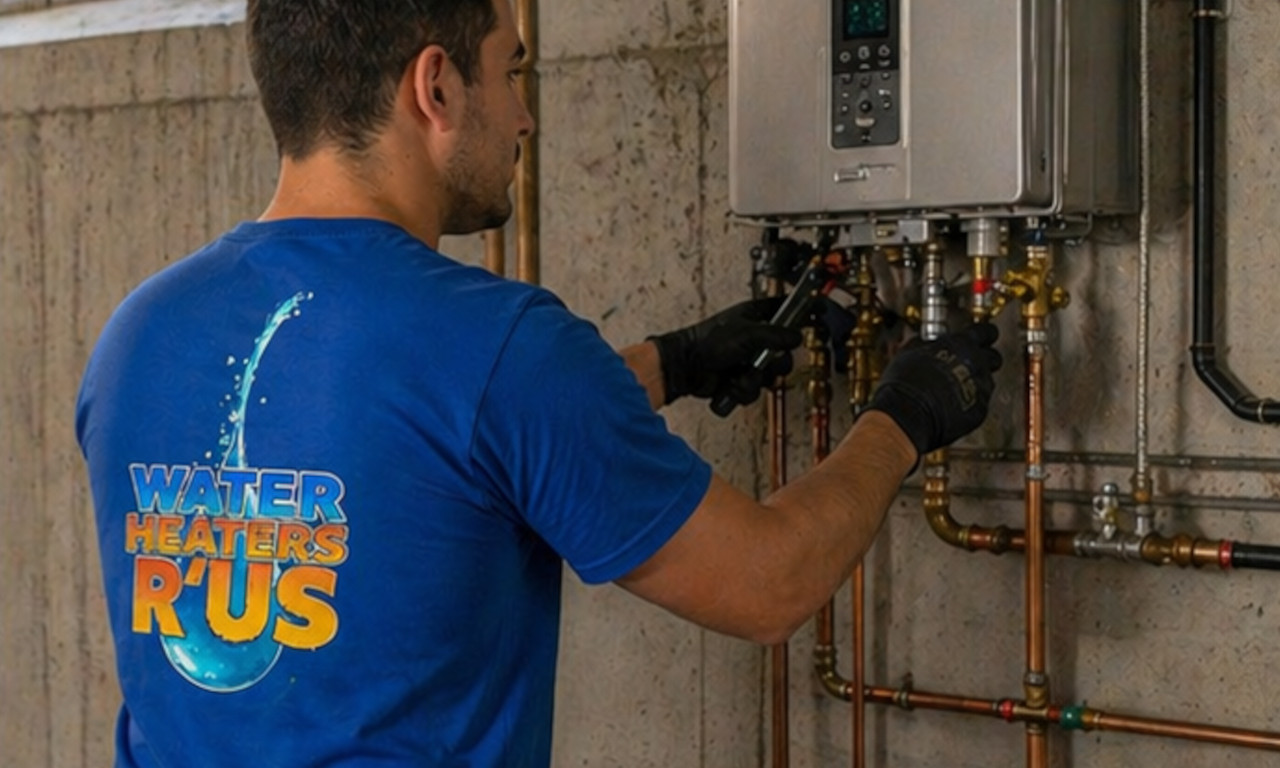
- Professional Installation: Incorrect installation can negate efficiency benefits and even pose safety risks. Trust certified professionals like Water Heaters R Us for precise and safe installation.
- Regular Maintenance: Sediment buildup in tank-style heaters, especially in areas with hard water like much of Ontario, significantly reduces efficiency. Flushing your tank annually and checking the anode rod can extend its life and maintain efficiency. Tankless units also require periodic flushing to remove mineral deposits.
- Water Quality and Water Softeners: Hard water, prevalent in many parts of Hamilton and Brantford, can lead to mineral scale buildup inside your water heater's tank and on heating elements. This scale acts as an insulator, forcing your unit to work harder and consume more energy to heat water. A water softener installed by Water Heaters R Us can mitigate this issue, protecting your investment and ensuring your water heater maintains its optimal efficiency for years to come.
- Pipe Insulation: Insulating the hot water pipes leading from your water heater can reduce heat loss as water travels to your faucets, meaning less energy is wasted.
Practical Tips for Saving Hot Water Energy This Summer and Beyond
Even with an existing water heater, there are steps you can take to boost efficiency:
- Lower the Thermostat: Most water heaters are set to 140°F (60°C). Lowering it to 120°F (49°C) can save energy without a noticeable difference in hot water availability for most households, and it reduces the risk of scalding.
- Fix Leaks Promptly: Even a small drip from a hot water tap can waste hundreds of gallons of hot water (and the energy used to heat it) over a year.
- Use Less Hot Water: Install low-flow showerheads, run dishwashers and washing machines only when full, and consider cold water cycles for laundry when appropriate.
- Insulate Hot Water Pipes: As mentioned, this is a simple DIY task that can make a difference, especially for longer pipe runs.
- Consider a Water Softener: If you're experiencing hard water issues (e.g., mineral buildup on fixtures, dry skin), a water softener can protect your water heater and other appliances from damaging scale, improving their longevity and efficiency.
When to Call the Pros at Water Heaters R Us
If your water heater is old, frequently running out of hot water, making strange noises, or if your energy bills are unexpectedly high, it might be time to consider an upgrade or professional assessment. Our team serves the entire region, from Caledonia to Oakville.
Understanding water heater energy efficiency ratings empowers you to make smarter choices for your Hamilton home. Whether you're looking to upgrade to a high-efficiency tankless system, install a heat pump water heater, or simply ensure your current unit is running optimally, Water Heaters R Us is here to help.
We provide expert advice, installation, and maintenance services for all types of water heaters and water softeners, ensuring you enjoy reliable hot water and lower energy bills. Don't let an inefficient water heater drain your resources this summer or any season!
Ready to Boost Your Hot Water Efficiency?
Contact Water Heaters R Us today! Our friendly experts are ready to discuss your options and help you find the perfect energy-efficient solution for your home in Hamilton, Ancaster, Dundas, Stoney Creek, Burlington, Grimsby, Waterdown, Binbrook, Oakville, Milton, Brantford, or Caledonia.
Call us at 905-679-9420 or visit waterheatersrus.ca to schedule a consultation!
Need a Water Heater?
Same-day installation, professional service, and flexible rent-to-own options across Hamilton and surrounding areas.
Call 905-679-9420